
Discover the best month and timing to view the Northern Lights in Murmansk with over 95% probability. Detailed seasonal calendar from September to April, KP Index guide, Polar Night insights, and expert aurora-chasing strategies.
Hunting the Northern Lights (Aurora Borealis) is widely considered one of the pinnacle bucket-list journeys on Earth. Beneath the subzero silence of the Arctic Circle, ethereal emerald ribbons and violet coronas sweep across the polar night in an otherworldly celestial dance. Yet, the aurora is a natural cosmic phenomenon governed by solar dynamics and atmospheric conditions. The foremost question for travelers planning their expedition is: What is the best time and month to see the Northern Lights in Murmansk with the highest probability? This comprehensive expedition briefing by Huong Xuan Nguyen – Regional Product Director & Senior Expedition Lead at Vielatin – breaks down the 2026–2027 aurora calendar, geomagnetic KP index forecasting, the enchanting Polar Night phenomenon, and field-tested strategies to ensure you witness this cosmic spectacle in its fullest glory.
1. The Three Essential Factors For Aurora Visibility
A common misconception is that extreme cold triggers aurora displays. In reality, auroral activity occurs in the ionosphere between 80 and 600 kilometers above the surface. For human eyes to capture the lights, three conditions must align:
- True Darkness: Because auroral glow is delicate, any ambient twilight or city light pollution dilutes visibility. Arctic summers feature the Midnight Sun (24 hours of daylight), rendering the aurora completely invisible regardless of solar wind intensity.
- Solar Wind Activity & KP Index: Charged solar particles interact with Earth's magnetosphere. A higher planetary K-index (KP 2 or above at Murmansk's latitude) produces vibrant, rapidly dancing ribbons.
- Clear Skies: This is the paramount ground variable. Auroras occur far above the cloud deck; dense cloud cover or blizzard conditions will obscure the sky regardless of high geomagnetic activity.
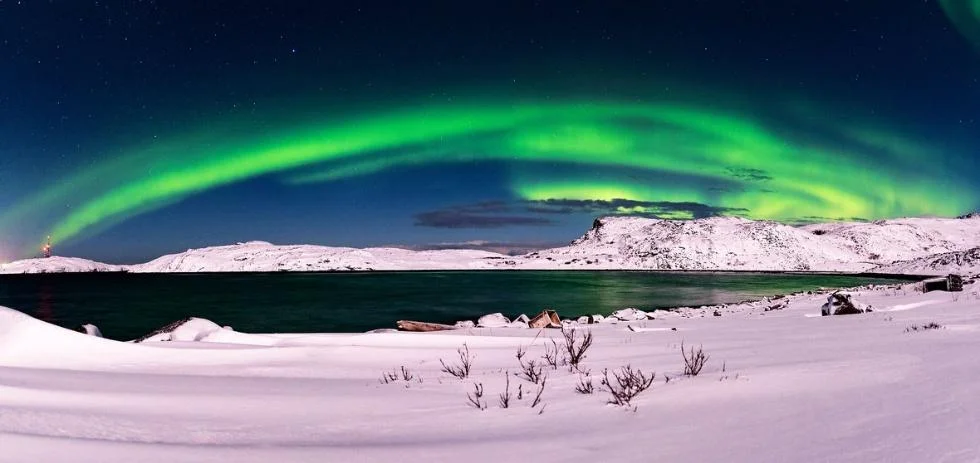
2. Month-by-Month Aurora Visibility Calendar (2026 – 2027 Season)
Murmansk boasts an exceptionally long eight-month observation season extending from early September through mid-April. Here is our field comparison:
| Month | Avg Temp | Dark Hours | Sighting Chance | Expedition Highlights & Seasonal Context |
|---|---|---|---|---|
| Sep - Oct | +2°C to +8°C | 10 - 13 hrs | (Phụ thuộc thời tiết) | Golden autumn taiga foliage, mild temperatures, and open lakes producing rare Double Aurora water reflections. |
| November | -3°C to -8°C | 15 - 18 hrs | 80% - 88% | Arrival of pristine snowpack, transformation into a winter wonderland. Onset of husky dog sledding and snowshoeing. |
| Dec - Jan (PEAK) | -12°C to -25°C | 20 - 24 hrs (Polar Night) | (Phụ thuộc thời tiết) | Ultimate Peak Season. The 40-day Polar Night allows sightings as early as 3:30 PM. Festive holiday atmosphere in Murmansk and fairy-tale snowscapes. |
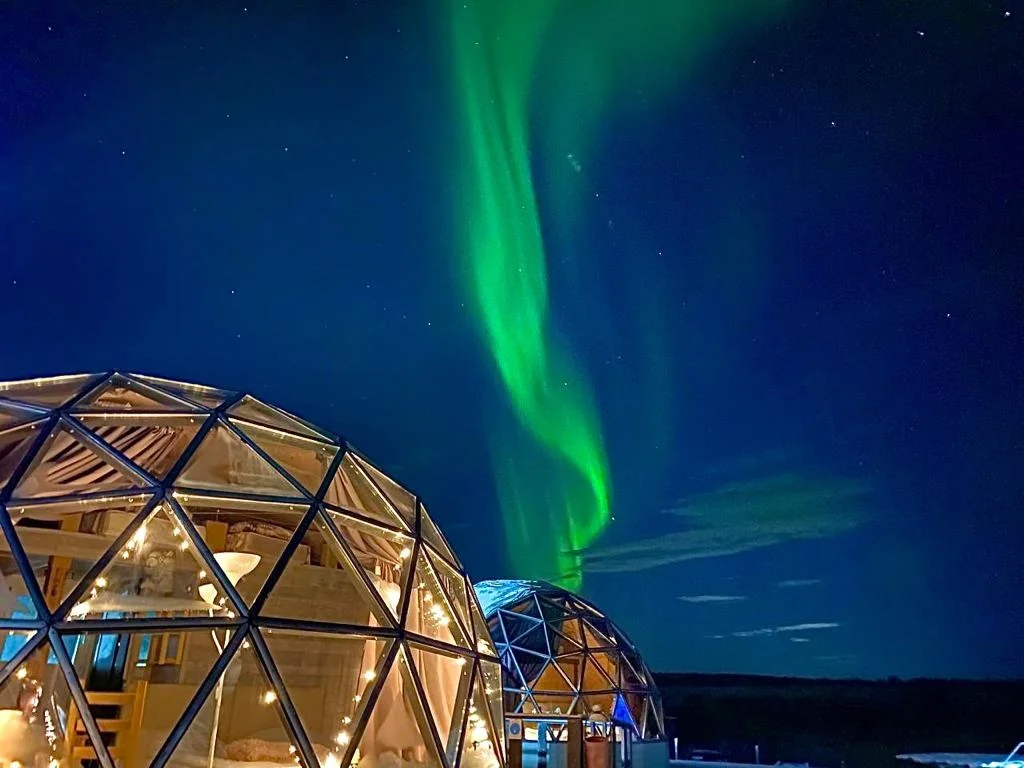
| February (PEAK) | -15°C to -28°C | 14 - 17 hrs | 90% - 95% | Superb winter conditions with exceptionally crisp, cloud-free Arctic skies. Prime window for Aurora Glass Igloo stays and Barents Sea coastal journeys. |
| Mar - Apr | -5°C to -15°C | 10 - 13 hrs | 80% - 85% | The Spring Equinox in late March triggers the Russell-McPherron effect, enhancing geomagnetic storm penetration and generating vivid purple and magenta auroras. |
3. Decoding The KP Index: Forecasting Like A Pro
The Planetary K-index measures global geomagnetic disturbance on a scale from 0 to 9. While travelers in lower latitudes require extreme solar storms (KP 5 - 7), Murmansk's unique geography fundamentally changes the equation:
- The Auroral Oval Advantage: Situated at latitude 68°58′ N, Murmansk lies directly underneath the permanent auroral auroral ring.
- At Murmansk: A modest KP 1 or KP 2 delivers striking emerald arcs overhead in clear skies. When activity reaches KP 3 or KP 4, the sky ignites with fast-moving violet coronas and dancing curtains.
- Field Monitoring: Vielatin leads rely on real-time NOAA solar wind telemetry, ground magnetometers, and localized satellite cloud radar to navigate around regional cloud pockets.
💡 Cloud-Chasing Mobility: The Vielatin Advantage
If localized marine fog touches coastal Murmansk, our high-clearance expedition vehicles flexibly pivot 40 to 80 km inland toward Kirovsk or the Finnish border to escape cloud cover, placing you beneath starry skies where the lights await.
4. The Polar Night Phenomenon: Continuous Twilight & Extended Windows
From approximately December 2nd through January 11th, the Sun remains continuously below the horizon in Murmansk. Rather than pitch darkness, mid-day is graced by 2 to 3 hours of ethereal Civil Twilight (11:30 AM to 2:00 PM), bathing snow-laden forests in delicate pastel hues of peach and lavender.
For aurora hunters, this offers an unmatched operational advantage: dark skies begin by mid-afternoon, doubling the nightly window of opportunity and allowing early evening captures without midnight exhaustion.
5. Curated Expedition Links & Essential Guides
Featured Arctic Journeys by Vielatin:
- All-Inclusive Russia Aurora Expedition 8D7N: Moscow, St. Petersburg, Murmansk aurora hunts, Teriberka Arctic Ocean & 1 night in a luxury heated Glass Igloo Dome.
- Russia Aurora Land Tour Package 7D6N: Seamless Moscow arrival and St. Petersburg departure with inclusive domestic flights, curated lodges, and expert local trackers.
- Teriberka Arctic Coast & Glass Igloo Field Guide: Practical advice for exploring the edge of the Arctic Ocean.
Chase The Aurora Borealis With Vielatin Arctic Specialists
Experience our 8D7N all-inclusive or 7D6N Land Tour expedition with 3-4 nights of aurora hunting, luxury glass igloo stays, and guaranteed visa support.

 Flagship Journey 2026 - 2027